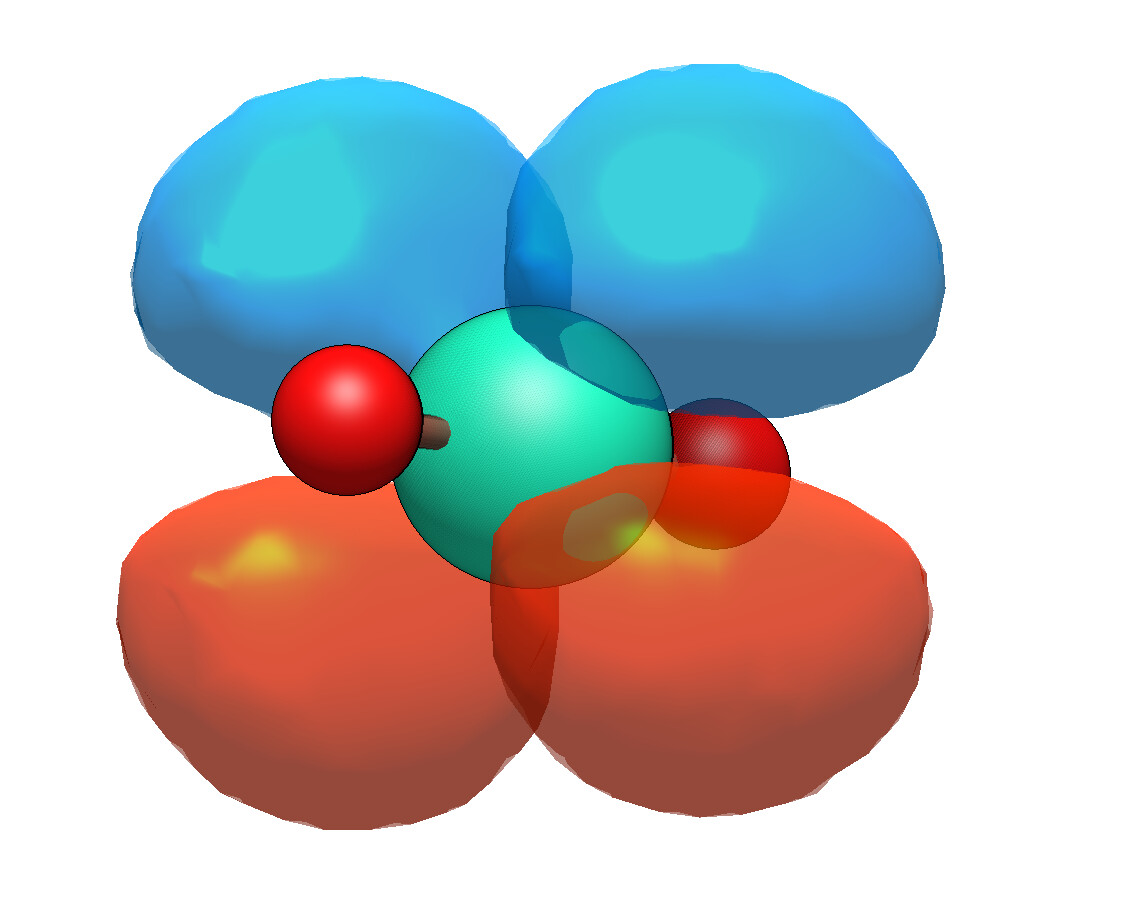
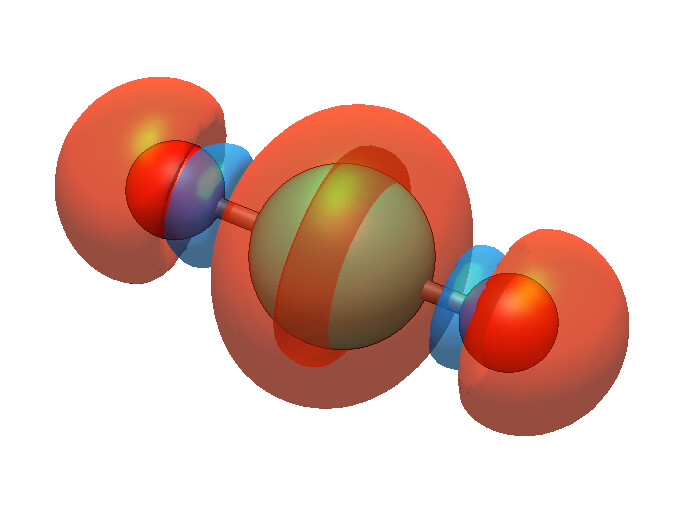
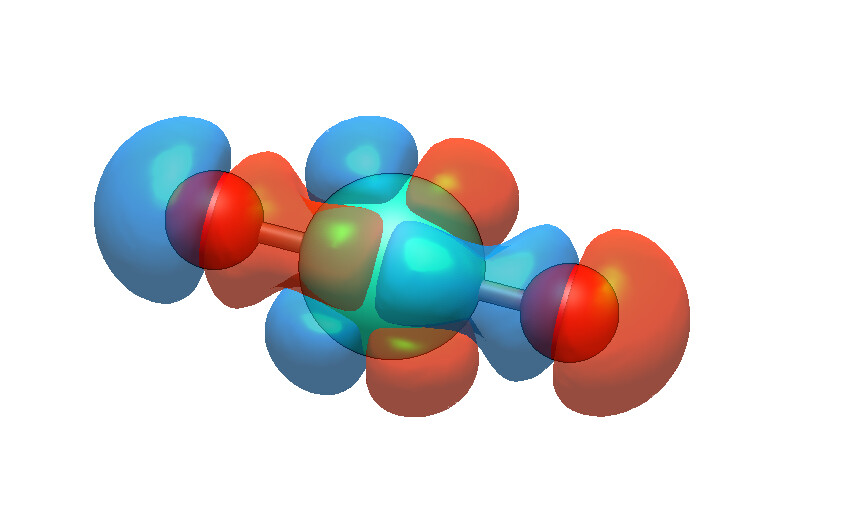
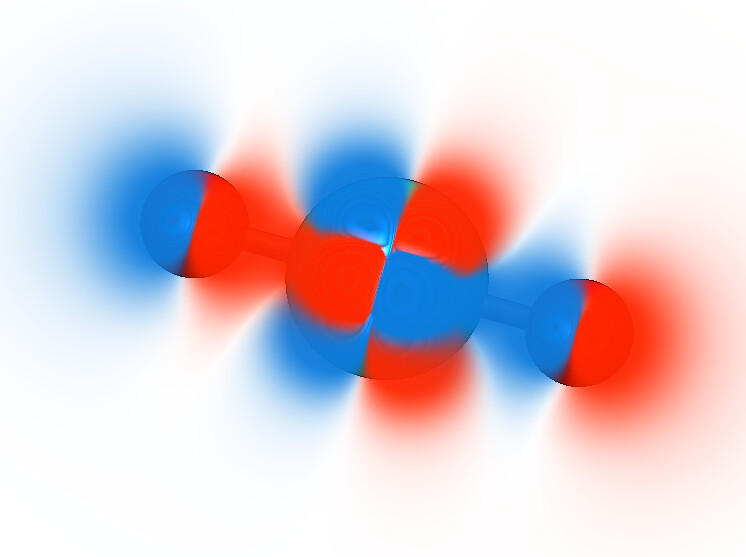
Was the handling of g orbitals added in 1.100? When I try to open a molden file for a molecule / basis with up to g orbitals, the orbitals presumably render (per the MO table) but they dont show in the screen. Nor do I get an error of some sort.
Avogadro thinks there should be 154 orbitals, but Molden only gives 128 energies?!
Some of the orbitals look okay, but some of them .. are decidedly wrong.
What program did you use for this? Did it somehow output spherical basis functions? (In principle, in Molden you should output [5d] [7f] [9g] for that .. which I think would add up to 128 orbitals?
Geoff, I used CFour for the calculation and the output file indeed gives me 128 orbitals. And per the manual, it does use spherical basis functions. Will try to repeat the calculation with Cartesians and see what happens.
It is not the first time I have CFour format molden files strangely… The vibrational frequencies of linear triatomics come all scrambled up .
I don’t think it’s just the spherical basis functions. I think there’s also something a bit weird with the ordering. I hacked the import code to assume spherical, and it still didn’t look quite right.
There’s a specific order to the angular momenta, and I’m guessing there’s something off about it.
I ran a few more ‘g’ runs with ORCA and everything looks okay (and ORCA defaults to spherical basis functions).
Certainly happy to help work through this with you.
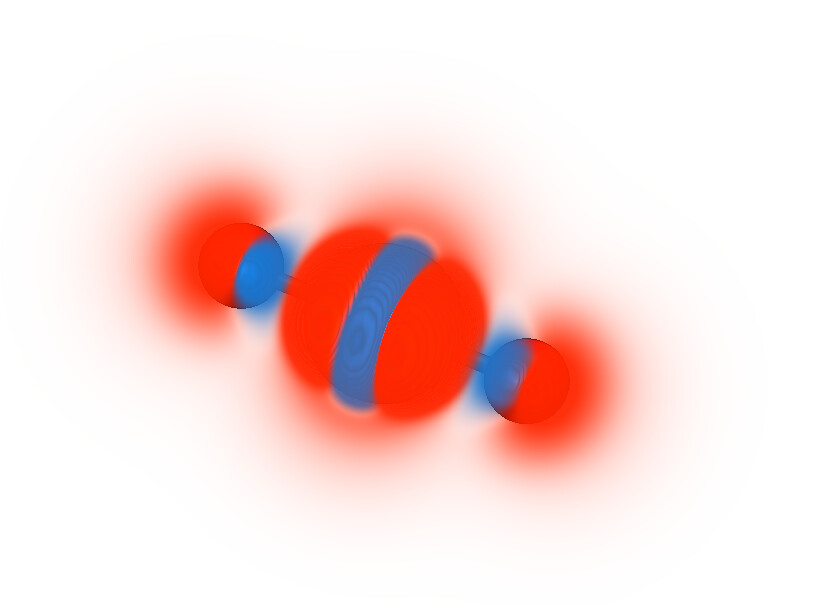
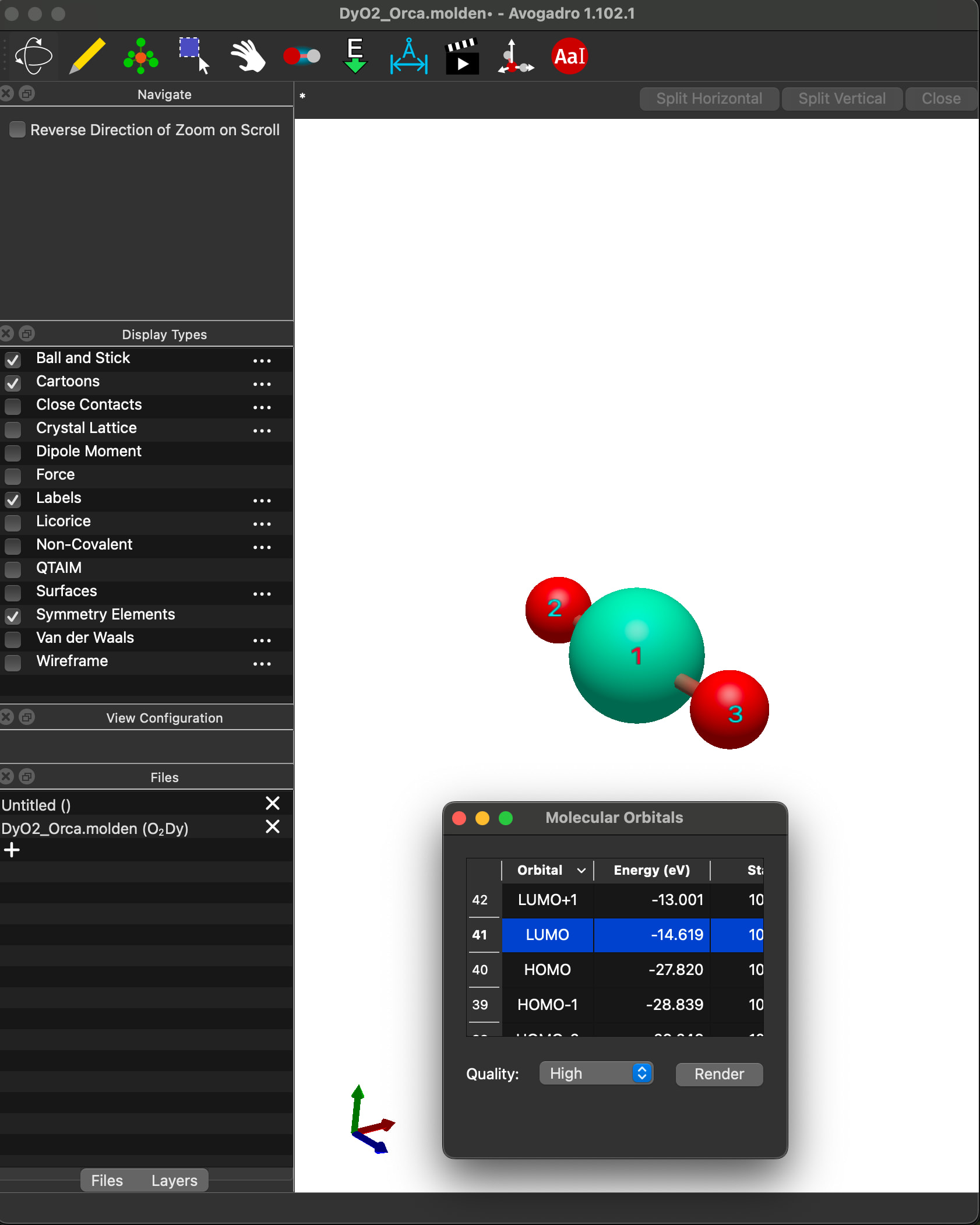
I tried to replicate the calculation with Orca. The energy is off by a few mHa but I think it’s basically the same result. It also has 128 MOs. And I also cannot visualize the few orbitals I tried (either with the Orca one or the CFour molden files). What orbital are you visualizing up there?
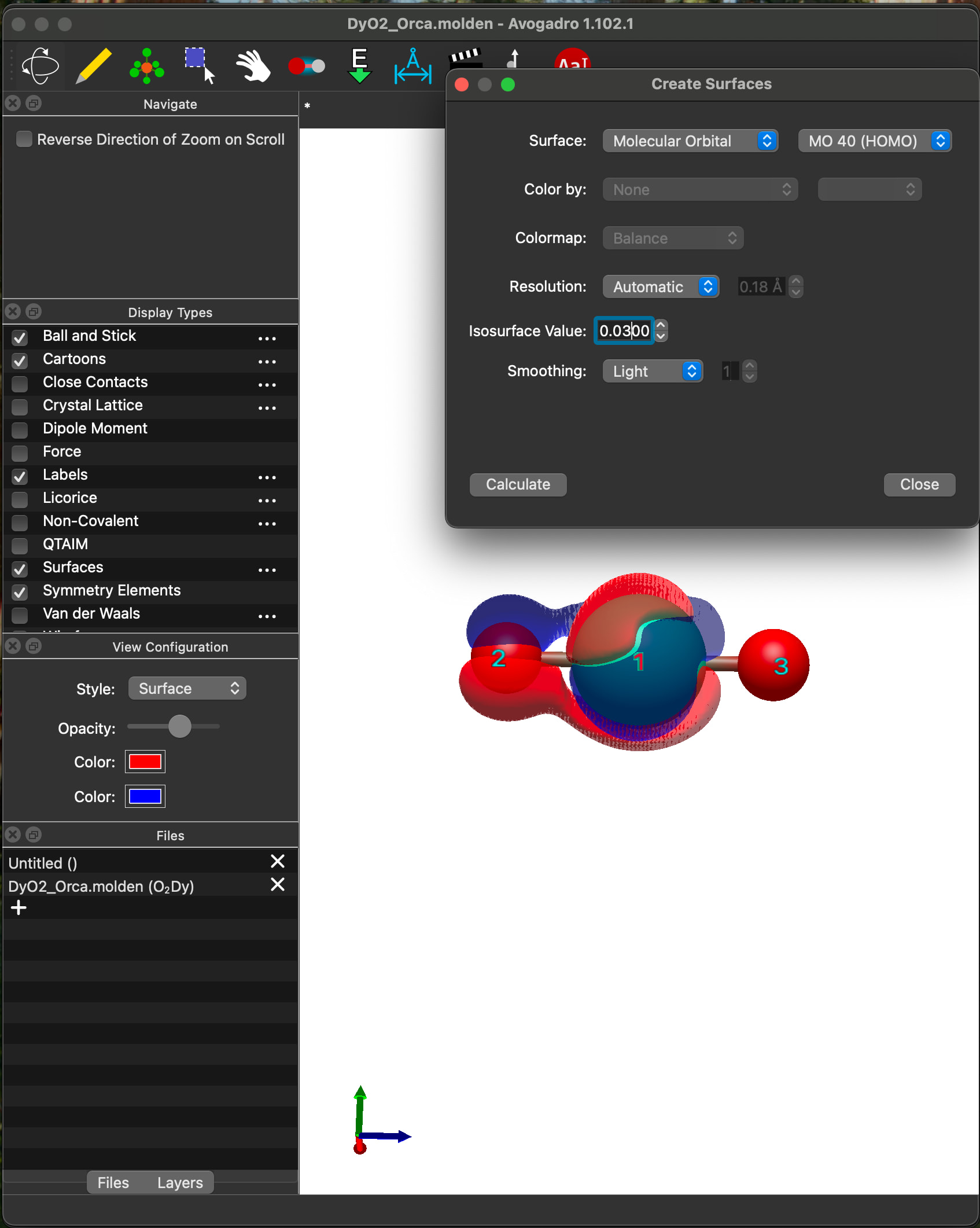
Oh silly me, thank you. What orbital number exactly are you plotting? My HOMO (40) definitely does not look like that. Mine has pi symmetry instead of sigma. What isovalues are you using? Is there a way to change the default isovalue of the MO table?
At the moment, no. It uses 0.03. I’ll bring back the configuration dialog after this release.
I was using HOMO = orbital 40, but I’m using 1.103 / continuous release. IIRC there were some bugs fixed in Molden parsing when I added support for open-shell species.
(I also have about a 30-40% speedup in orbital rendering.)
The current continuous release is essentially 1.103, or you can wait until tomorrow for the official release binary.